
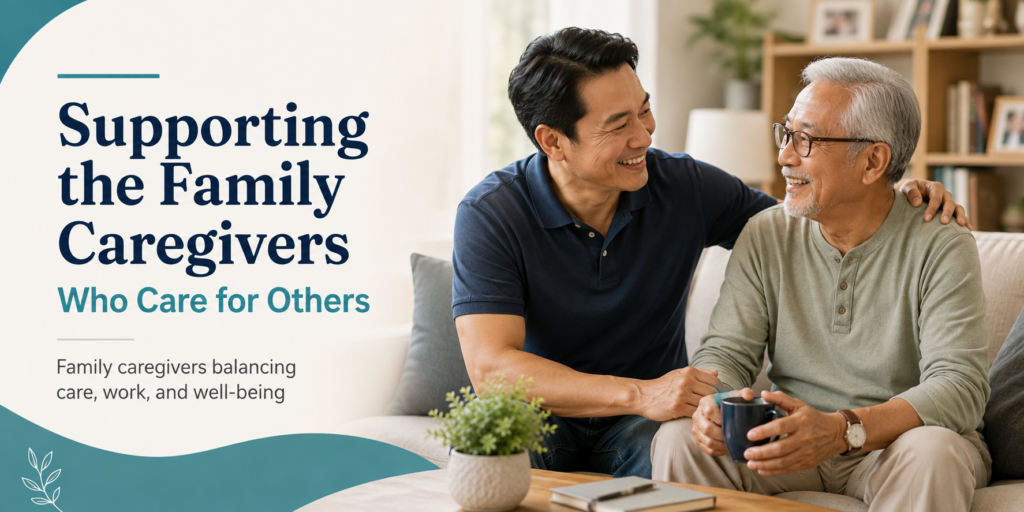
Supporting the Family Caregivers
Who Cares for Others
Family caregivers are the quiet foundation of many families and communities. They help
loved ones manage illness, disability, aging, recovery, and everyday life—often while balancing
jobs, parenting, finances, and their own health.
Caregiving can be deeply meaningful, but it can also be exhausting and isolating. Supporting
family caregivers is not only compassionate—it strengthens the well-being of the person
receiving care, the caregiver, and the broader community.
Key point: When caregivers are supported, everyone benefits—care recipients, families, workplaces, and
health systems.
Who Family Caregivers Are
Family caregivers (sometimes called informal caregivers) are people who provide unpaid care
to someone they know—often a parent, spouse, child, sibling, neighbor, or friend. Care can
range from occasional check-ins to daily hands-on support.
Caregiving responsibilities may include transportation, meal preparation, medication
management, mobility assistance, personal care, navigating appointments, coordinating
services, and offering emotional support.
The Hidden Load Caregivers Carry
Caregiving is more than a set of tasks. It often includes constant planning, vigilance, and
decision-making—what many describe as the “always on” mental and emotional load.
Caregivers may feel pressure to stay strong, avoid asking for help, or manage complex
systems without clear guidance.
Over time, this can contribute to fatigue, stress, burnout, loneliness, and strained
relationships. Caregivers may postpone their own medical care, lose social connections, or
feel guilty when they take breaks—even when breaks are necessary.
Watch for signs of strain: sleep disruption, irritability, frequent illness, withdrawal,
persistent worry, or feeling numb or hopeless.
What Support Can Look Like (That Actually Helps)
Support is most effective when it is specific, consistent, and respectful of the caregiver’s
preferences. Broad offers like “Let me know if you need anything” can be hard to act on.
Concrete help makes it easier for caregivers to say yes.
| Type of support | Examples you can offer |
| Time | Stay with the care recipient for one hour so the caregiver can rest, run errands, or attend an appointment. |
| Meals & basics | Drop off a meal, handle grocery pickup, or set up a simple meal train. |
| Transportation | Drive to an appointment, help with pharmacy runs, or provide a reliable weekly ride. |
| Admin help | Help organize paperwork, make calls, manage a calendar, or track questions for the next appointment. |
| Emotional support | Check in regularly, listen without fixing, and acknowledge what the caregiver is carrying. |
A Simple Checklist for Friends, Family, and Neighbors
-
- Offer one specific task (not a general question) and give two possible times you can do it.
-
- Follow up after you offer help—caregivers are busy and may not respond right away.
-
- Ask what is not helpful so you don’t create extra work or stress.
-
- Include the caregiver in everyday life (texts, invitations, short visits) without pressure to
-
- attend.
-
- Respect privacy and dignity—caregiving can be personal and sensitive.
Supporting the Caregiver’s Well-Being
Caregivers deserve care, too. Practical support matters, but so do encouragement and
permission to rest. Small steps—like regular breaks, a short walk, a medical checkup, a
support group, or a counseling appointment—can reduce stress and restore resilience.
If a caregiver is experiencing persistent distress, severe anxiety, depression, or thoughts of
self-harm, encourage professional support. In urgent situations, seek immediate local
emergency assistance.
Reminder: Rest is not a reward for finishing caregiving. Rest is part of what makes caregiving possible.
What Workplaces and Communities Can Do
Caregiving affects attendance, schedules, finances, and health—yet many caregivers try to
manage it quietly. Workplaces and community organizations can reduce strain by making
support visible and normal.
Flexible options — predictable scheduling, remote options when possible, and
understanding around appointments.
Clear benefits navigation — HR and community leaders can provide simple, readable
pathways to available supports.
Caregiver-friendly culture — leaders can model boundaries and normalize asking for help
without stigma.
Connection — peer groups, check-ins, and community programs that reduce isolation.
References
1. 2. 3. 4. Family Caregiver Alliance. Caregiver statistics: Demographics.
https://www.caregiver.org/resource/caregiver-statistics-demographics
National Alliance for Caregiving & AARP . Caregiving in the U.S.
https://www.aarp.org/caregiving/research/info-2020/caregiving-in-the-united-states.html
Centers for Disease Control and Prevention. Caregiving.
https://www.cdc.gov/aging/caregiving/index.htm
National Institute on Aging. Caregiving. https://www.nia.nih.gov/health/caregiving