
How Strong Social Networks Improve Mental Health
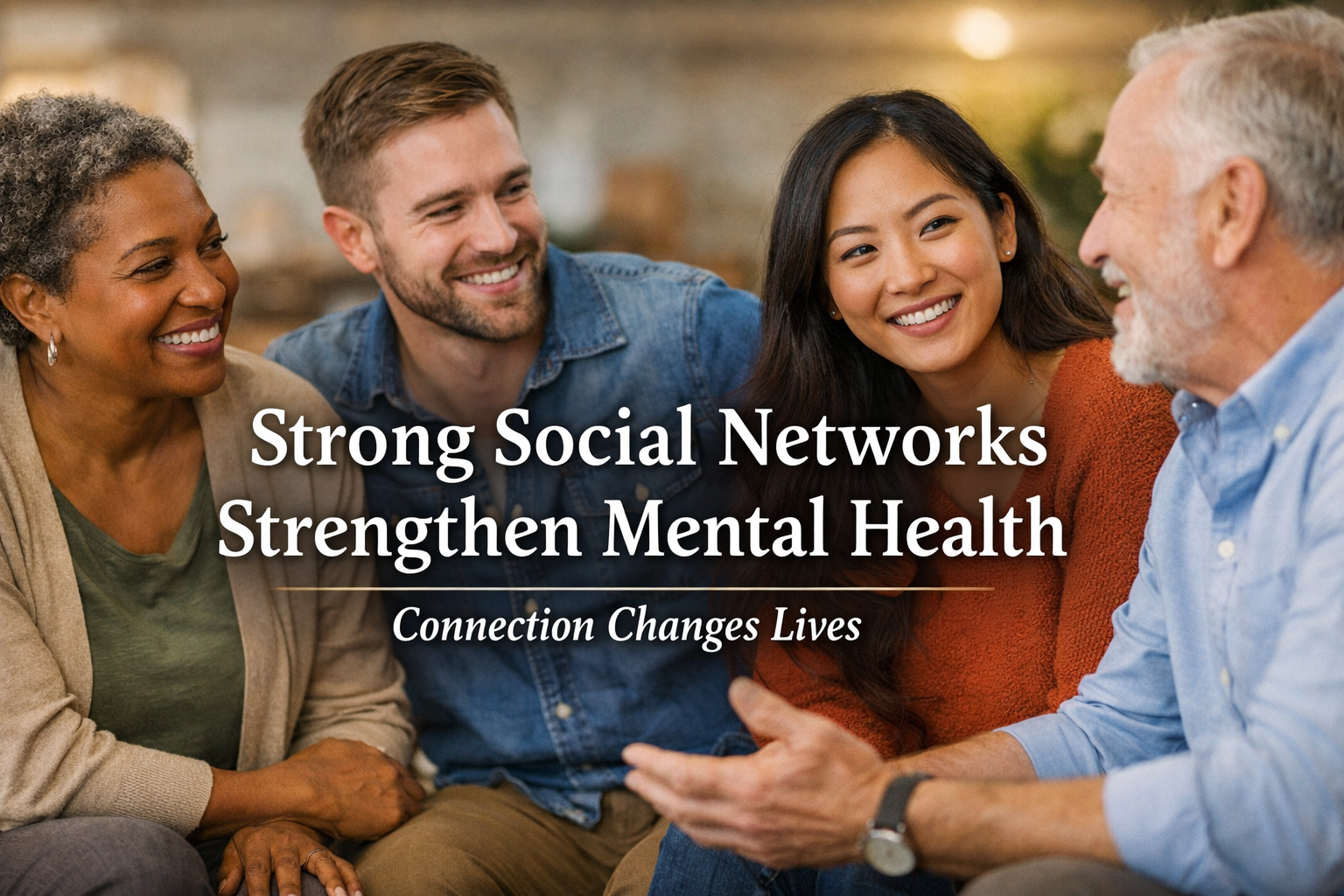
The Power of Connection in a Disconnected World
In a world that is more digitally connected than ever, many people feel increasingly isolated.
Messages are instant. Meetings are virtual. Social media is constant.
And yet, loneliness is rising.
The truth is simple but powerful:
Human beings are wired for connection.
Strong social networks — real friendships, meaningful conversations, and supportive communities — are not just emotionally fulfilling. They are essential for mental health.
1. Social Connection Reduces Stress
When we face challenges alone, stress intensifies.
But when we have people to talk to — friends, mentors, neighbors, support groups — our nervous system responds differently. Stress hormones decrease. Emotional regulation improves. Problems feel manageable instead of overwhelming.
Even knowing someone is available to listen can significantly reduce anxiety.
Connection creates safety.
2. Support Networks Protect Against Depression
Research consistently shows that individuals with strong social ties are less likely to experience prolonged depression.
Why?
Because:
Isolation fuels negative thought cycles
Conversation interrupts rumination
Encouragement restores perspective
Shared experiences remind us we are not alone
Support doesn’t eliminate hardship. But it makes hardship survivable.
When someone says, “I’m here for you,” it changes everything.
3. Healthy Relationships Improve Self-Worth
We develop identity through relationships.
When people:
Recognize our strengths
Appreciate our presence
Invite us into community
Listen to our stories
We begin to see our own value more clearly.
Positive social networks reinforce belonging — and belonging strengthens mental resilience.
4. Community Encourages Healthy Habits
Strong social networks often lead to healthier behaviors.
Friends encourage:
Regular activity
Accountability
Better sleep patterns
Emotional expression
Seeking help when needed
When we are connected, we are more likely to care for ourselves — because others care for us too.
5. Loneliness Impacts Mental and Physical Health
Chronic loneliness has been linked to:
Increased anxiety
Higher rates of depression
Cognitive decline
Elevated stress levels
Greater risk of chronic illness
Connection is not optional for well-being.
It is foundational.
6. Building Social Networks Is Possible at Any Stage of Life
Many adults believe it is “too late” to build new friendships.
It is not.
Community can be built intentionally through:
Volunteer groups
Faith communities
Support networks
Local meetups
Shared-interest activities
Small group gatherings
It begins with one conversation.
One invitation.
One step forward.
A Final Thought: Connection Is Courage
Building relationships takes vulnerability.
It takes reaching out.
Showing up.
Listening.
Being present.
But the reward is profound.
Strong social networks do more than improve mental health.
They restore hope.
They build resilience.
They create belonging.
At Friendship Support Network, we believe no one should have to navigate life alone.
Connection changes lives — sometimes in small ways, sometimes in life-altering ways — but always in meaningful ones.
And it starts with community.